Before the Chargers Arrive: A Power-Supply Audit for UK Port-Centric Warehouses
Electrification in port-centric warehousing has moved from pilot projects to procurement. Operators are specifying additional reefer points, expanding cold storage, installing automated handling and preparing for electric van and HGV fleets. Each of these loads is individually modest. Together they frequently exceed the capacity of a supply that was designed for lighting, a bank of forklift chargers and a handful of dock levellers. The result is a familiar sequence of events: equipment is ordered, delivery dates are set, and only then does someone ask whether the site can actually draw the power.
An electrical-capacity audit is not an engineering indulgence. It is a scheduling exercise with a business case attached.
The bill is evidence, not an audit
The obvious starting point is the half-hourly metering data, and it is genuinely useful. Twelve months of readings will show the site's maximum demand, its load profile across shifts and seasons, and how much of the apparent headroom is a function of mild weather rather than genuine surplus. A site that rarely exceeds 300 kVA on a 500 kVA connection looks comfortable.
That comfort can be misleading. Recorded maximum demand reflects the plant that was running on the day, not the plant that could run at once. It also says nothing about the condition of the transformer, the rating of the low-voltage boards, or whether the cable to the far end of the shed can carry a new load without derating. The meter answers the question of consumption; it does not answer the question of capacity.
Start at the transformer
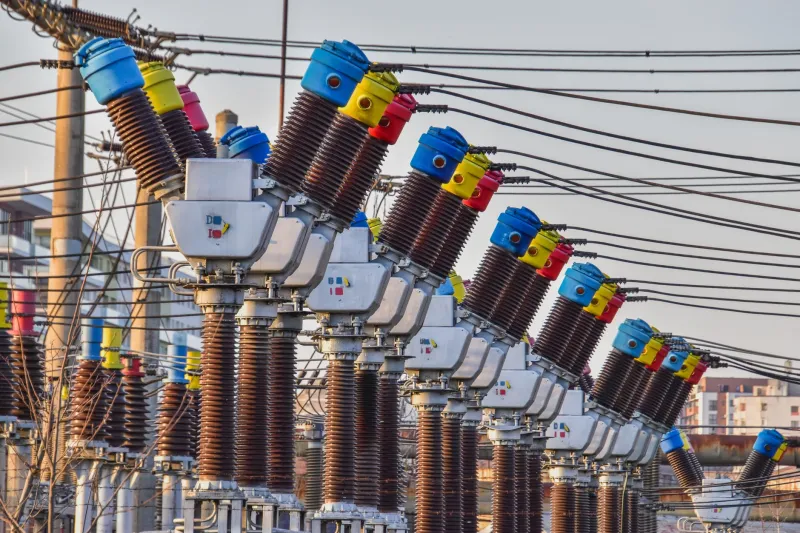
The audit should begin physically at the substation, not in the energy manager's spreadsheet. Record the nameplate rating of each transformer and the ambient conditions in which it actually operates. A unit rated at 40°C in an enclosed compound on a port estate can be pushed close to its limit in a warm August, particularly where ventilation has been compromised by later building work or where the enclosure has become a store for pallets.
From there, work through the low-voltage distribution. Board schedules are often incomplete or out of date. Cable sizes, route lengths, grouping factors and the presence of thermal insulation all affect what a circuit can carry. Switchgear short-circuit ratings and protective device settings matter as soon as a large new load is added, because fault levels and discrimination change. Earthing arrangements deserve the same attention, especially where a new substation or charger compound is being created some distance from the original installation.
The shape of the load, not just its size
A capacity calculation built on a simple sum of nameplate ratings will overstate the requirement and produce an unnecessarily expensive upgrade. A calculation that ignores simultaneity will understate it and produce nuisance tripping.
The practical approach is a load schedule. For each proposed item, record its rated input in kW and kVA, its power factor, its start characteristic and its expected hours of operation. Cold-store compressors draw heavily on start; opportunity-charged handling equipment clusters around shift changes; electric vehicle chargers ramp according to their own control logic; automated storage and retrieval systems have their own duty cycles. The schedule should then apply a realistic simultaneity factor to each group, informed by existing metered data wherever a comparable load already exists. Forty reefer plugs may never all run at once, but in the week before a bank holiday the site may find that thirty-eight do.
The connection question: DNO, IDNO or landlord
In a port estate, the supply rarely belongs to the occupier in any simple sense. Power may arrive through a private network owned by the port, through an independent distribution network operator, or through a landlord-held connection to the distribution network operator. The lease may cap the capacity available to the tenant, and the landlord may hold the only route to the connection agreement.
This distinction between physical spare capacity and contractual available capacity is where many projects lose time. A transformer may have room on its low-voltage board while the connection agreement permits no additional import. Early engagement with the network operator is therefore part of the audit, not a later formality. It is also worth examining how an increase in capacity affects distribution use-of-system charges and standing charges, because a larger connection carries a larger fixed cost whether or not the load materialises. In some cases, dynamic load management across chargers and cold store plant can defer an upgrade for several years at a fraction of the capital cost.
Resilience and power quality belong in the same calculation
Capacity is not the only constraint. Standby generation is usually sized for life safety, controls and perhaps a partial cold-store load rather than the whole site, and the transfer arrangements need to be understood before new equipment is connected. Uninterruptible supplies for control systems and automated plant should be checked against the revised load.
Power quality deserves equal attention. Variable-speed drives, chillers and vehicle chargers can introduce harmonics and voltage distortion that affect other equipment on the same board. Large compressor starts can produce voltage dips that are tolerable on an old installation and disruptive on a new one. A power quality survey before commitment is cheaper than remedial filtering afterwards.
A sequence that works
- Compile twelve months of half-hourly data and identify the twenty highest half-hours with their load composition.
- Inspect the substation: nameplate ratings, ambient conditions, cooling, condition and spare ways.
- Map the low-voltage distribution: board schedules, cable sizes, protective devices and single points of failure.
- Build a load schedule for proposed equipment with realistic simultaneity factors.
- Compare the proposed load against assessed capacity at transformer and board level.
- Test the contractual position: lease terms, connection agreement and landlord consent.
- Set out options in order of cost: load management, staged connection, additional transformer capacity, new high-voltage supply.
- Price resilience and power quality within the same business case.
The cost of sequencing badly
High-voltage upgrades in constrained parts of the UK network can take years from enquiry to energisation, and a port estate adds its own approvals: landlord consent for compound changes, planning permission where new equipment is visible, and cable routes that may cross third-party land. Operators who begin the audit after ordering chargers frequently discover that the equipment arrives long before the supply does.
A staged approach often works better. Charging infrastructure can be installed with load management from the outset, capping site demand while the network operator's offer is negotiated. Cold-store expansion can be phased against transformer replacement. The audit does not need to produce a single, final number. It needs to produce a defensible view of what the site can do now, what it could do with a defined investment, and how long each step will take.
Electrical capacity is a physical asset with a rating, a condition and a remaining life. Treating it as a line in the utilities budget, rather than as part of the estate plan, is how electrification programmes end up waiting at the gate.