The Vertical Question: Fire Suppression Capacity in Port-Centric Warehouses
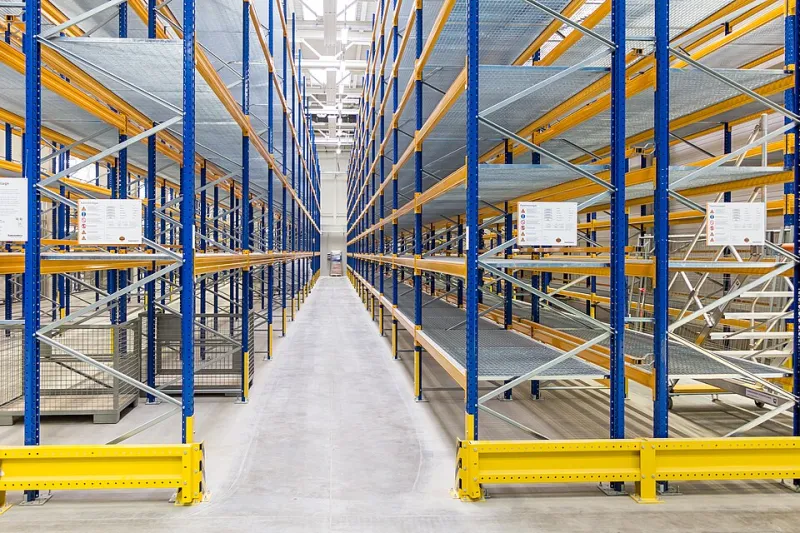
Photo: Raimond Spekking, CC BY-SA 4.0, via Wikimedia Commons
Port-centric warehouses have a habit of growing upward. A site that began life as a transit shed for palletised goods can, within a few storage cycles, become a high-bay operation with narrow aisles, selective racking and a very different fire load. The quay may not have moved, but the risk inside the shed has. The fire suppression system, however, is often still described in commissioning documents that predate the current racking layout.
That is the vertical question facing many UK port-centric sites in 2026: not whether a sprinkler system exists, but whether its capacity still matches the warehouse it is now protecting. Fire suppression is a chain of dependencies, from the water authority main to the pump set, from the riser to the deflector, and from the insurer's certificate to the site's day-to-day storage discipline. An audit should test the whole chain, not just the visible pipework.
Why port-centric sites drift
Port-centric warehouses are commercially fluid. Operators consolidate, deconsolidate, cross-dock and store. A bay given over to fast-moving consumer goods can be reallocated to plastics, aerosols or lithium-ion products with little more than a revised picking profile. Racking may be extended, aisle widths narrowed, or a mezzanine introduced to recover space. Each change can alter the fire load, the smoke production characteristics and the ability of the sprinkler system to deliver water where it is needed.
The proximity of the quay adds a further dimension. Salt-laden air, dust from bulk cargoes and the practical need to keep doors open during handovers can all affect equipment condition. A system that passed its commissioning test may now have corroded heads, a partially closed valve or a pump set that has not been exercised under full-flow conditions for several years. None of these faults announces itself until it matters.
Begin at the water main
An audit should start upstream of the warehouse. The key questions are simple: how much water can the site actually draw, at what pressure, and for how long? For many port-centric estates, the limiting factor is not the sprinkler grid but the capacity of the incoming main or the stored water reserve. A booster set cannot compensate for a supply that was sized for a smaller building and a lower hazard classification.
The site team should obtain current flow and pressure test data from the water authority or its appointed contractor, not rely on a historic commissioning figure. Break tanks, suction tanks and any private fire main should be inspected for capacity, sediment, corrosion and valve position. If the site relies on a stored water reserve, the audit should confirm that the usable volume has not been reduced by structural movement, silt or unauthorised draw-off. The output should be a measured water profile, not an assumed one.
Coverage is a design question, not a maintenance check
Sprinkler coverage is often treated as a maintenance item: are the heads clear, are the pipes painted, is the alarm panel healthy? Those checks matter, but they do not answer the more fundamental question of hydraulic adequacy. The system must be designed for the storage height, the commodity classification and the racking arrangement now in use. If the racking has grown taller or the commodity has become more challenging, the original design basis may no longer apply.
A practical audit should compare the current storage layout with the design documents. It should verify that sprinkler deflectors are at the correct distance below the ceiling or rack, that in-rack sprinklers are present where required, and that aisle widths and flue spaces have not been compromised by additional pallet positions. BS EN 12845 and the insurer's own requirements provide the technical benchmarks, but the site's operational reality provides the test. A warehouse that stores to the roof because the pick face demands it may be undermining the very system installed to protect it.
Pumps, power and proof
Pump testing is where many audits expose uncomfortable gaps. A weekly churn test confirms that a pump starts; it does not confirm that it will deliver the required flow and pressure under fire conditions. The audit should review the full test regime, including annual full-flow testing, diesel fuel quality and polishing, battery condition, controller settings and the resilience of the power supply. Where electric pumps rely on a standby generator, the generator should be tested under load, not merely started.
The evidence trail matters as much as the test itself. Insurers increasingly expect a documented programme with dated results, defect rectification and named responsibilities. A 2026 audit should not accept a commissioning certificate from an earlier decade as proof of current capacity. It should ask for the last full-flow test, the last insurance survey and the last verification of the fire strategy against the actual storage layout.
Insurance expectations and operational constraints
Insurer requirements can exceed building regulation minima, particularly for high-hazard commodities or large storage heights. A risk improvement notice may require additional water supplies, faster pump response, revised racking configurations or stricter housekeeping controls. These requirements should be translated into site procedures, not filed as administrative correspondence.
Operational constraints also deserve a place in the audit. Fire service access around the quay, the position of hydrants, smoke ventilation, the segregation of dangerous goods and the clearance of loading bays all affect the outcome of an incident. Mixed cargo near the quay can create a complex fire load, and the suppression system must be supported by good segregation, clear signage and realistic evacuation arrangements. The audit should therefore involve warehouse operations, health and safety, engineering and the insurer, not just the fire contractor.
A practical audit rhythm
For port-centric warehouses, fire suppression capacity is not a one-off compliance exercise. It should be reviewed whenever the racking layout changes, whenever a new commodity family is introduced and at least annually as part of the site's risk programme. The output should be a short, board-level statement: the design basis, the measured water supply, the last full-flow test result, the insurer's position and the operational constraints that could undermine the system.
If the racking is going higher, the water must be able to follow it. The vertical question is ultimately a question of evidence. Port-centric sites that can demonstrate the chain from main to nozzle are better placed to protect people, cargo and continuity of trade.