Demurrage by Design: Re-Engineering Port-Centric Warehouses to Stop Funding Delay
Demurrage is often booked as a cost of doing business. That is a mistake. In a port-centric warehouse, demurrage and detention are frequently designed in long before the first container is discharged. They emerge from the interaction of warehouse layout, appointment scheduling, customs handoff and haulage planning. Treating the resulting charge as a port problem or a carrier problem misses the point. The charge is a symptom, and the underlying design is usually within the operator's control.
The distinction matters. Demurrage is generally charged when a container remains inside a port or terminal beyond free time. Detention is generally charged when the container remains outside the port beyond free time. Both are avoidable in principle. In practice, many UK sites pay them because the operating model cannot absorb the variability that container supply chains produce.
The hidden architecture of delay
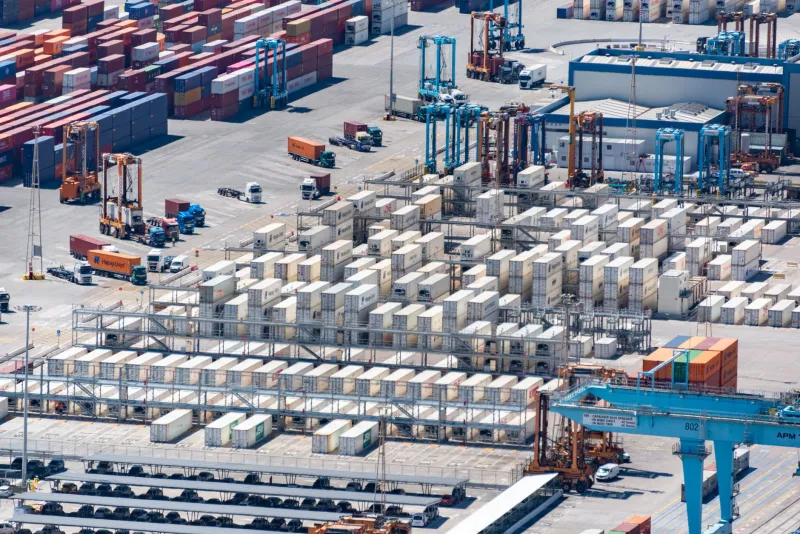
Warehouse layout is the first culprit. A site designed for pallet storage rather than container flow will always struggle with inbound peaks. If there is no dedicated cross-dock lane, an inbound container and an outbound trailer compete for the same door. If the staging area is treated as overflow storage, it stops being a staging area. If the yard has no buffer for containers awaiting customs release or haulier collection, the terminal becomes the buffer by default.
Appointment scheduling is the second culprit. Container booking systems are often set to suit the haulier's round rather than the terminal's release pattern. A container that is customs cleared at 10am but booked for a 4pm slot is a demurrage candidate. A batch of containers released together but booked across a single narrow window creates a queue that the warehouse cannot unload. The schedule looks efficient on paper because it is measured against haulage utilisation, not container dwell.
Where customs handoff creates demurrage
Customs is not a back-office step after arrival. If the customs declaration is prepared only when the container is discharged, the site is already behind. Missing commercial documents, valuation queries, origin evidence, licence requirements and port health checks all extend dwell time. The Customs Declaration Service has improved the mechanics of declaration processing, but it has not removed the need for early data capture and broker integration.
A pre-clearance workflow should start at booking, not at discharge. The shipper, broker and warehouse operator should share milestones: documents received, declaration lodged, duty or VAT arrangements confirmed and release obtained. Freeport customs sites can help, but only if the site operator and the broker work from the same event log. A customs site that is administratively separate from the warehouse's appointment system will still generate demurrage.
Concrete fixes that change the economics
- Build a true cross-dock lane. Separate container unloading from put-away and outbound loading. The lane should have enough doors and enough floor space to clear a container without blocking the next one.
- Schedule against release, not just haulage. Appointment rules should allow containers to be booked when release is probable, with a controlled rebooking path when customs or terminal performance slips.
- Move customs upstream. Pre-lodgement, document readiness checks and broker integration should be standard for every inbound container, not an exception for problem shipments.
- Plan haulage carrier-neutrally. A single carrier's network should not dictate release timing. A neutral haulage control tower with visibility of container release, customs status and terminal appointments can smooth the flow.
- Create a buffer yard with rules. Buffer space is useful only if it has a time limit and a clear owner. Otherwise it becomes a second warehouse with none of the controls.
- Review demurrage by root cause. A monthly review should separate terminal delay, carrier delay, customs hold, haulier no-show and warehouse capacity. The charge should be assigned to the cause, not simply absorbed.
- Align contracts with operating reality. Free time, detention terms and haulage responsibilities should reflect the actual customs and appointment workflow, not an assumption that every container moves in a single clean window.
Measuring what matters
A port-centric warehouse should track container release to gate-out, appointment adherence, customs hold duration, demurrage per TEU and detention days. These metrics should sit alongside the usual labour and productivity measures because they reveal whether the site is funding delay through its own design. A low unloading cost per container is not impressive if the site is paying demurrage to achieve it.
The most useful discipline is a weekly exception review. Which containers missed their free time, why, and what would have prevented it? Patterns will usually emerge quickly: a customs document that arrives late, a terminal window that clashes with a shift change, a haulier that cannot cover a Friday afternoon. Each pattern has an operational fix.
Design out the charge
Demurrage is not a mysterious port levy. It is a financial signal that container flow has broken down. In UK port-centric operations, the most effective response is not to negotiate a slightly longer free period. It is to redesign the warehouse, the appointment system and the customs handoff so that the container moves when it is ready, not when the haulier's schedule permits. Operators that treat demurrage as a design flaw rather than a cost line will find that the savings are real, measurable and repeatable.