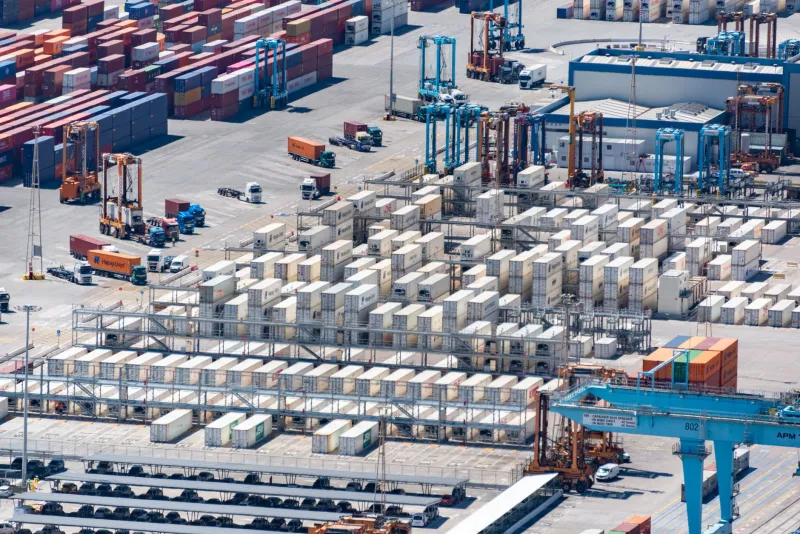
Rails in the Hinterland: The Case for Inland Ports in UK Port-Centric Supply Chains
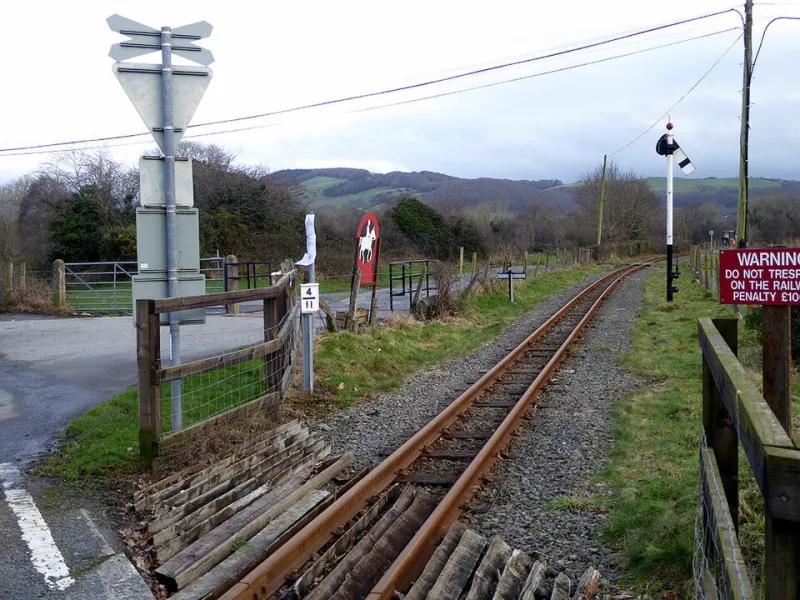
Photo: John Lucas , CC BY-SA 2.0, via Wikimedia Commons
Port-centric logistics has an intuitive appeal: keep inventory close to the quay, shorten the final-mile journey and compress the time between vessel discharge and onward distribution. For many UK shippers that logic remains sound. But it is not universal, and the industry is increasingly testing a more nuanced model. The inland port paradox is simple: a warehouse does not have to sit beside deep water to be port-centric. If it is linked to a port by a reliable rail service, supported by a competent terminal and governed by clear customs processes, it can perform the same supply-chain role while avoiding some of the quayside model's structural constraints.
Why the quayside model is under strain
Port estates are finite. Land close to a container terminal commands a premium, and every square metre given over to long-term storage is a square metre unavailable for container flow. HGV congestion around major ports is a recurring operational constraint, not a seasonal nuisance. Labour availability in port towns can be tight, particularly for early and late shifts that mirror vessel windows. And berth priorities can mean that a warehouse receives containers faster than it can deconsolidate them when vessel schedules bunch.
That is the quiet weakness of a quayside-only strategy. A warehouse close to the ship can become a bottleneck precisely because it is close to the ship. When inbound containers arrive in a peak, the site needs either enough dock doors, enough labour and enough yard space to absorb the surge, or a secondary node that can act as a buffer. Rail-linked inland warehousing offers that secondary node, but only when the rail product is genuinely reliable rather than nominal.
The UK rail freight baseline
The UK rail network can move large volumes of containers over long distances, but capacity is not evenly distributed. A shipper considering an inland port should test path availability, terminal opening hours, gauge clearance, train length and whether the terminal handles empty containers as well as laden ones. Strategic Rail Freight Interchanges are designed to co-locate warehousing with rail terminals, but not every SRFI is equal. Locations such as Daventry, Hams Hall, Doncaster and the Tees Valley illustrate different models of rail-connected distribution, and they are not interchangeable.
Policy ambition to shift freight from road to rail is long-standing, but targets do not create paths. A warehouse is only rail-connected in a meaningful sense if the terminal can accept the container, the train path exists and the last mile is economic. Shippers should ask for evidence of scheduled services, not a map with a rail line drawn beside the site.
Congestion risk is redistributed, not removed
A port-only strategy concentrates risk. An inland strategy can diversify it. But rail has its own failure modes: a missed path, terminal crane failure, industrial action, weather and the mismatch between train cut-off times and vessel discharge. Rail is differently resilient, not automatically more resilient. The practical question is whether the inland site has a credible road fallback and whether the shipper can accept the cost of using it when rail underperforms.
For some categories, the answer will be no. For high-volume, predictable container flows, the answer may be yes. The distinction matters because inland ports are often sold on congestion relief without a frank account of the rail service's operating envelope.
Carbon accounting needs lane-level evidence
Rail generally produces lower emissions per tonne-kilometre than road, but generic modal factors are not enough for credible Scope 3 reporting. A lane-level assessment should include terminal handling, drayage at both ends, empty running and train load factor. The GLEC framework is a useful discipline because it forces the shipper to compare like with like rather than claim a modal shift that the actual routing does not support.
A container that travels 200 miles by rail and then 60 miles by road may still outperform a short road move from port, but the shipper should prove it with measured data. Carbon claims should be auditable, not aspirational.
Practical criteria for the location decision
A useful decision framework should cover seven points:
- Rail service frequency and cut-off. Daily services are more useful than weekly ones, but the cut-off must align with vessel discharge and warehouse shift patterns.
- Terminal capability. Confirm empty container handling, customs status, reefer capability and dangerous goods arrangements.
- Customs design. If the inland site relies on customs warehousing or a freeport customs site, the formalities must be understood before the first container arrives.
- Last-mile economics. The inland site must sit within a sensible radius of the customer base and labour pool.
- Total cost-to-serve. Compare rail, terminal handling, drayage, demurrage, inventory and road fallback as one cost stack.
- Carbon evidence. Ask for lane-level emissions data rather than a generic rail saving.
- Commercial flexibility. Check train operator choice, haulier neutrality and contract length.
A simple stress test is to ask whether the site can operate for a fortnight without road-based container recovery. If it cannot, the rail link is a convenience rather than a supply-chain design feature.
A portfolio, not a religion
The strongest UK port-centric strategies are likely to use both quayside and inland capacity rather than treating one as a universal answer. Quayside warehousing remains valuable for fast-moving inventory and port-dependent processing. Rail-linked inland warehousing is quietly winning ground because it gives shippers a way to separate container flow from port congestion, land scarcity and labour pressure. The case is not that inland ports are always better. The case is that the location decision deserves the same operational rigour as the freight contract itself.