Dry Runs for Wet Weather: Rehearsing Flood Response at UK Port-Centric Warehouses
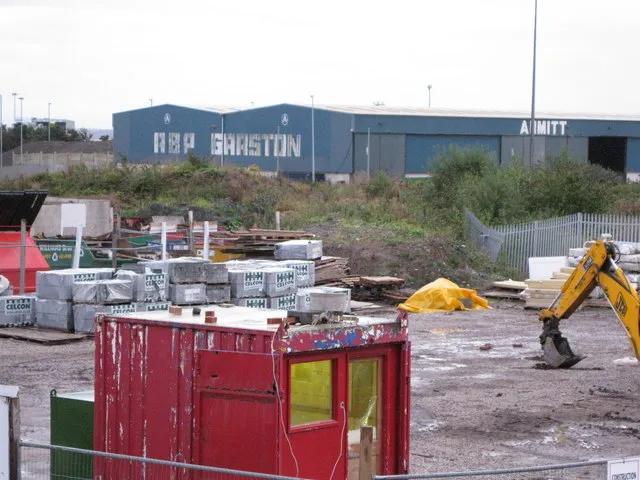
Photo: Geoff Poole, CC BY-SA 2.0, via Wikimedia Commons
A flood plan that has never been exercised is not a plan; it is a hypothesis. For UK port-centric warehouses, the hypothesis is tested by water arriving from several directions at once: a tidal surge, a prolonged rainfall event, a blocked surface-water drain, or a combination that overwhelms the yard before anyone has opened the incident log. The operational question for 2026 is not whether the site is close to water — it is whether the site can demonstrate, before winter 2026–27, that its response works under realistic conditions.
Start with the water's route, not the forecast
Flood readiness often begins with a weather warning, but the more useful starting point is the site drainage plan. Operators should confirm where water would go if the usual outlets were restricted: across the apron, towards dock levellers, into yard gullies, along haul roads, or back up through service ducts. A walkover with the estates or facilities team should identify low points, fall lines, kerb heights, and any shared drainage that depends on a third party such as the port authority or local highway network.
The evidence pack should include the Environment Agency flood map for planning, any available surface-water mapping, historic site records, and photographs of previous high-water marks. Where the site sits within a port estate, the operator should also confirm who controls pumps, penstocks, and outfalls, and who can authorise their operation outside normal hours. The owner for this work is usually facilities or estates, supported by the port landlord. The output is not a risk rating alone; it is a marked-up drainage and exceedance route that supervisors can use during an incident.
Treat elevation as a commercial decision
Not all stock carries the same flood exposure. A practical audit maps products by water sensitivity, value, and recovery time, then compares that against the height of the lowest rack beam, pallet bases, and temporary storage areas. The aim is not to elevate everything; it is to decide in advance which lines move first, where they move to, and who authorises the move.
This should be a joint operations and commercial decision because it affects pick faces, replenishment, and customer expectations. Pre-agreed triggers are more useful than vague intentions: for example, a named manager may authorise the relocation of defined SKUs once a weather warning reaches a set threshold or when a nearby gauge reaches a stated level. Temporary platforms and racking allowances should be checked by a competent person before use. Utilities such as low-level sockets, chargers, and control panels also belong in this assessment, since water damage to infrastructure can stop operations long after the stock has been saved.
Isolate utilities without improvisation
During a flood, the speed of isolation matters as much as the height of the water. The audit should identify every utility that may need to be switched off or protected: electricity, gas, water, fire alarms, sprinkler control, pumps, generators, fuel tanks, telecoms, and IT equipment. Each isolation point should be labelled, mapped, and accessible, with a named competent person and a deputy.
Operators should also test the assumptions behind the response. Can the sump pumps run if the power fails? Is there fuel for the generator, and is it stored above expected water levels? Are contractor call-out numbers current for evenings and weekends? Are there isolation procedures for sub-tenants or shared services? The output is a one-page isolation schedule and a contact card held both digitally and physically. The owner is typically engineering or maintenance, with sign-off from health and safety.
Test insurance assumptions against operational facts
Insurance is not a substitute for readiness, and policy wording should be checked before an incident rather than afterwards. Brokers and risk managers should confirm how the policy defines flood, whether surface-water escape is included, what excess applies, whether there are sub-limits for cleanup or business interruption, and what evidence the insurer will expect. Operators should not assume that a general flood peril automatically responds to every route by which water enters a building.
A useful rehearsal includes a short claims scenario: which photographs would be taken, which inventory records would be exported, who would contact the loss adjuster, and how salvage and disposal would be authorised. The owner is finance or risk, supported by operations. The test is whether the site can produce credible evidence quickly, not whether the policy schedule can be found eventually.
Sequence the evacuation of people, data, stock and vehicles
Flood response sequencing should begin with people and end with recovery. A practical sequence covers warning reception, muster, visitor and contractor accounting, lone-worker checks, and communication with the port authority and emergency services. Data continuity should follow closely: backup servers, cloud access, handheld devices, and paper fallbacks for dispatch and receipt. Stock and vehicle movement should then follow the priority list agreed with commercial teams, including trailers, yard equipment, and gate control.
Supervisors need a clear communications tree that reaches customers, insurers, hauliers, and staff who are not on site. The plan should also state who may speak publicly and how operational updates will be issued. The owner is usually the site manager or operations lead, with health and safety owning the people elements.
Rehearse with timings and an after-action review
A tabletop exercise is a low-risk way to test decision-making, but it should be followed by a physical walkthrough and, where feasible, a timed drill. Injects can include a power failure, a blocked access road, a missing contractor, or a customer demanding an immediate stock release. The site should record how long it takes to locate isolation points, assemble the incident team, issue warnings, and move a nominated pallet. These timings become the baseline for improvement.
An after-action review should produce a short action log with one owner and one date per action. Repeating the exercise before the next winter surge is more valuable than producing a longer document. For operators within the PD Portcentric Logistics network, the standard is simple: every flood action should have a named owner, a tested trigger, and evidence that it has been rehearsed on site — not merely written into a file.