Weight Is a Flow Problem: Axle-Load Control in Port-Centric Warehousing
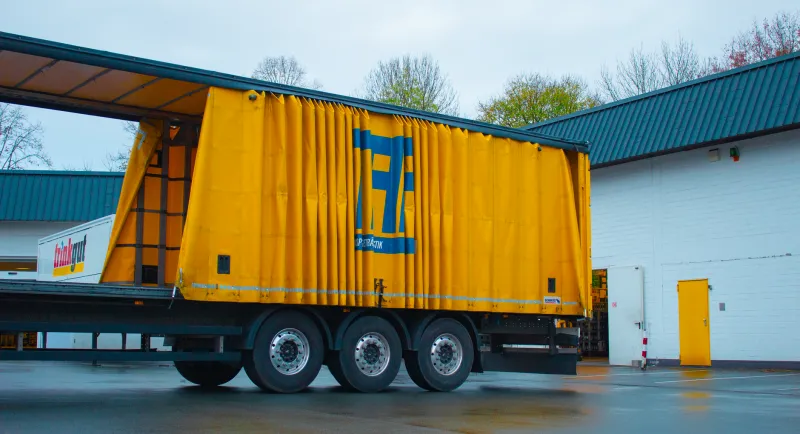
Port-centric warehousing compresses the distance between storage and shipment, but it also compresses the time available to correct mistakes. A trailer can be loaded, sealed and presented at the port gate before anyone has properly interrogated how that weight is distributed across its axles. When the weighbridge is treated as a gatekeeping formality rather than a control point, the warehouse is not managing weight. It is merely recording it.
For shippers and supply-chain managers, the consequences are rarely confined to a single overweight ticket. Poor axle-load discipline can damage yard surfaces, distort loading schedules, trigger DVSA roadside scrutiny and turn a routine container handoff into an expensive exception. The operational answer is not a stricter gate check at the end of the process. It is a weight-control design that begins with pre-advice and ends with a feedback loop.
The gate is the wrong place to start
Axle loads are determined long before a vehicle reaches the weighbridge. They are shaped by pallet weights, trailer type, container stuffing patterns, the sequence in which SKUs are picked and the point at which a load plan is signed off. A weighbridge positioned only at the outbound gate can confirm a problem, but it cannot prevent one. By then, the trailer may already be sealed, the driver may already be on a tight slot and the corrective work may involve unloading and reloading in a yard that was never designed for that kind of reversal.
In a port-centric setting, the risk is amplified by the proximity of the quay or container terminal. The warehouse may be only minutes from the port exit, which encourages late decisions. A pick can be held back until the last moment, a late order can be added to an already built trailer, or a container can be stuffed without a clear weight envelope. Proximity creates flexibility, but it also creates a false sense that weight can be managed at the end of the flow.
Audit point one: what the weighbridge is for
The first audit question is not whether a weighbridge exists, but what role it plays. Is it a trade weighing instrument, a checkweighing device, a VGM (verified gross mass) tool or a gate toll? These purposes are related but not identical. A weighbridge used for container VGM needs the right calibration, operating procedure and data capture. A weighbridge used only to check outbound trailers may be too late to influence loading patterns.
Operators should map every point at which weight is captured and every point at which it is used. Does the weighbridge data feed the warehouse management system, the transport management system or a standalone spreadsheet? Is the driver given a ticket with axle readings, or only a gross weight? Are exceptions reviewed by a supervisor, or simply filed? A weighbridge that produces a number but not a decision is an expensive piece of gate furniture.
Audit point two: trailer loading patterns
Axle-load compliance is not only a matter of total gross weight. It is a matter of distribution. A trailer can be within its gross vehicle weight and still place excessive load on a drive axle, a kingpin or a tri-axle group. Port-centric warehouses often handle mixed pallets, dense goods and containers that have been packed elsewhere. Without a load plan that considers weight as well as volume, the loading team is effectively guessing.
The audit should sample recent load plans and compare them with weighbridge readings. Are heavy pallets placed over the correct axles? Are load plans updated when a late SKU is added? Do pickers know the weight of what they are building, or only the number of pallets? Is there a sign-off step before a trailer is sealed? The objective is not to turn warehouse staff into transport engineers. It is to give them a simple, repeatable weight envelope for each trailer type and to make exceptions visible before the vehicle leaves the yard.
Audit point three: the VGM handoff
Where a port-centric warehouse stuffs containers or prepares them for export, the VGM handoff deserves particular attention. The shipper is responsible for the verified gross mass, but the operational data may be assembled by a forwarder, a haulier, a warehouse team or a combination of all three. If the method is calculation rather than weighing, the quality of the underlying data matters. If the method is weighing, the procedure must be consistent and documented.
The audit should test whether VGM figures are produced at the right time, by the right party, using the right method. It should also test whether the warehouse receives a weight profile early enough to influence container stuffing. A VGM that arrives after the container is sealed is a compliance record, not a planning tool. In a port-centric flow, the handoff between warehouse and carrier is where weight discipline is most easily lost.
Audit point four: yard surfaces and just-in-time loading
Weight problems do not only affect road compliance. They affect the yard. Overloaded trailers, poor axle distribution and repeated turning movements can accelerate damage to paving, drainage and loading aprons. That damage is often attributed to age or weather, but it may be a symptom of uncontrolled loading. A warehouse that routinely presents heavy vehicles at the edge of their limits is also a warehouse that is stressing its own infrastructure.
Just-in-time loading decisions add another layer of risk. When trailers are built late, the loading team has less time to check distribution, less time to rework a poor plan and less time to resolve a weight exception. The result is a rush at the gate and a higher chance of a vehicle leaving with an issue that should have been caught earlier. Weight discipline is therefore a scheduling issue as much as a compliance issue.
Designing weight control into the flow
A practical response is to treat weight as a flow variable with defined control points. Pre-advice should include estimated pallet weights and any known heavy or awkward items. Slotting and pick sequencing should respect weight as well as cube. Load plans should be signed off before sealing, and the weighbridge should be positioned and staffed to challenge exceptions rather than simply record them. Exception data should feed back into the next load plan, not disappear into a filing cabinet.
For UK shippers, this is also a commercial issue. DVSA scrutiny, rework costs, missed slots and yard repairs all carry a price. In 2026, with port-centric supply chains under pressure to move faster and with less slack, weight control cannot be left to the final checkpoint. It has to be designed into the warehouse flow, audited like any other operational risk and owned by someone with the authority to stop a trailer before it becomes a problem at the port exit.