Beyond the Receipt: Managing Empty Container Returns at UK Port-Centric Warehouses
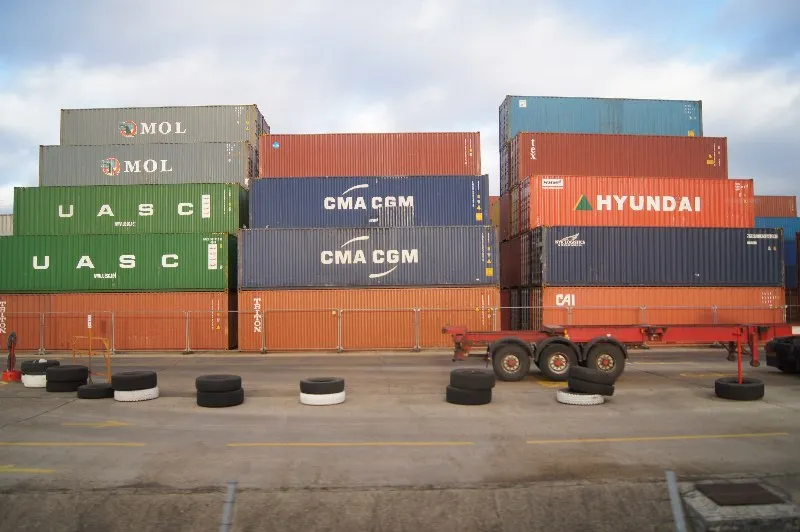
Photo: Fernweh , CC BY-SA 2.0, via Wikimedia Commons
Port-centric warehouse design has a familiar centre of gravity: the inbound receipt. Plans are built around berth windows, quay transfer, container unpack, put-away and replenishment. Outbound activity receives attention too, but usually as a dispatch task rather than a design problem. Empty-container returns are the weakest link in that model. They consume yard space, create detention exposure and compete with loaded departures for equipment, drivers and supervision. For UK shippers, the result is a flow that is tolerated rather than controlled.
Start with the return leg
The first step is to treat the empty return as a process with its own data set. For each carrier and container type, record the free-time allowance, the nominated depot, booking rules, accepted return hours and recent acceptance performance. Build a return profile from the last 90 days: average time from unpack to return, failed return attempts, detention charges and the reasons for delay. This profile should sit alongside the inbound receipt plan, not in a separate transport folder. Once the return leg is visible, the warehouse can be designed around two clocks rather than one.
Yard layout that separates the flows
Empty containers should not share prime dispatch lanes with loaded outbound trailers. A dedicated empty-container zone, clearly marked by carrier and depot, reduces the risk of a return-ready box being buried behind export stock. The zone should have enough depth for inspection, a safe turning circle and a one-way traffic route that does not cross pedestrian areas. Where space allows, a return-ready bay close to the exit gate can hold boxes that have been checked, photographed and booked in. The objective is not simply to store empties; it is to keep them moving out at the same rate they arrive.
Yard layout also affects equipment utilisation. Reach stackers and empty handlers should not be diverted from quay or loading work to hunt for a single box. A simple bay map, updated daily, is more useful than a complex yard management module that nobody maintains. The map should show carrier, container number, condition status and the next booked return slot. In busy port-centric sites, that visual control is often the difference between a clean return and a detention charge.
Depot selection is a routing decision
Many shippers inherit a single nominated depot from a carrier and never test the alternative. That is a commercial and operational risk. Depot selection should be reviewed as a routing decision: travel time from the warehouse, booking availability, peak congestion, cut-off times and the likelihood of a failed return. A depot that is ten minutes closer on a map may be slower in practice if it queues at the gate or closes early on a Friday.
Where volumes justify it, a multi-depot approach can spread risk. The warehouse team should hold a live depot calendar and pre-book return slots before the container is unpacked. For port-centric sites near Teesside, the Humber or the major southern ports, backhaul planning matters as much as outbound delivery planning. A vehicle that delivers to a customer and returns an empty box on the same leg is cheaper than a dedicated empty run, but only if the booking and the paperwork are ready before the driver leaves.
Dispatch planning with two deadlines
Outbound dispatch is usually planned against a customer delivery window. Empty returns add a second deadline: the carrier free-time cut-off. A dispatch plan that ignores the second clock will look efficient on the loading bay and expensive in the detention report. The simplest control is a daily planning meeting that reviews both loaded departures and empty returns for the next 48 hours. Each return should be assigned to a named vehicle, driver and booking slot. Exceptions should be escalated the day before, not on the morning of the cut-off.
A priority matrix helps when capacity is tight. Customer-critical loads, carrier free-time expiry and depot booking availability should be scored together. If a loaded departure and an empty return compete for the same vehicle, the decision should be made against agreed rules rather than by whoever calls last. The warehouse should also set a cut-off for accepting late empty returns, so that gate and yard teams are not asked to absorb unplanned work at the end of the shift.
Make one person accountable
Empty-container flow needs an owner. That may be a transport planner, a yard supervisor or a dedicated equipment controller, but the responsibility should be explicit. The owner maintains the return profile, books slots, monitors detention and chairs the daily review. A weekly scorecard should track empty dwell time, return success rate, detention cost per TEU and failed booking incidents. These measures should be reviewed with carriers and shippers, not kept inside the warehouse.
The commercial terms matter too. Detention and demurrage clauses should reflect the operational reality of the site, including booking windows and depot performance. A shipper that understands its return profile is in a stronger position to negotiate free time or challenge charges that arise from carrier-side constraints.
Design the outbound flow as a whole
Port-centric warehousing works best when inbound and outbound are designed together. Empty-container returns are not a housekeeping issue at the back of the yard. They are part of the outbound flow, with their own capacity, timing and cost. By mapping the return leg, separating empty and loaded movements, choosing depots on operational evidence and planning dispatch against two deadlines, UK shippers can reduce detention exposure and give the warehouse a more predictable daily rhythm. The alternative is to keep funding delay through the yard gate.