When the Port Stops: A 2026 Playbook for Port-Centric Warehouses Facing Sudden Closure
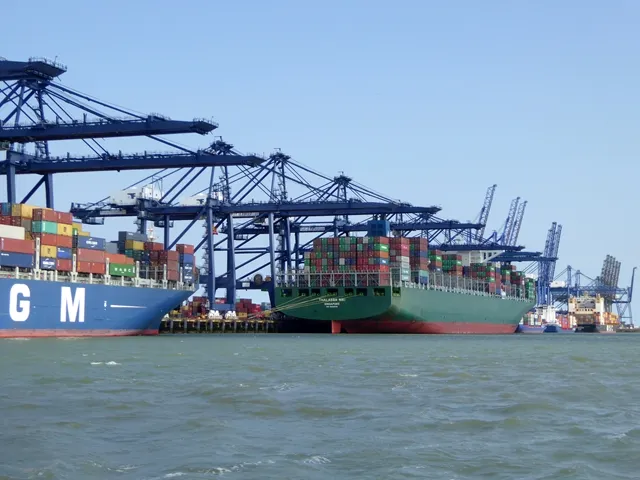
Photo: Oliver Dixon , CC BY-SA 2.0, via Wikimedia Commons
Port-centric warehouses are designed for rhythm: vessels arrive, boxes are discharged, stock is put away and outbound loads leave on schedule. Disruption breaks that rhythm without warning. A storm closes a berth, fog suspends pilotage, industrial action stops gate operations or a cyber incident takes down a terminal system. The warehouse may be physically intact, but stock, labour and customer commitments are suddenly out of position.
Many sites still rely on informal contingency plans held in a supervisor's head. That is not a playbook. A playbook sets out triggers, roles, routes, capacity and communication before the incident, so that the first hour is not spent looking for a phone number. The following framework is designed for UK port-centric operations in 2026, where weather volatility and digital risk are part of the operating environment.
Phase 1: Set triggers and take the first hour
A playbook begins with a trigger table. Triggers should be specific: a port closure notice, a berth suspension expected to last more than four hours, a road closure affecting the main route, a terminal IT outage or an official strike notice. Each trigger should name an incident lead, a deputy and the people who must be contacted. The first hour is for situation reporting, not problem-solving. Confirm the facts with the port, carriers and hauliers. Establish what is moving, what is stranded and what can still leave the site. Freeze non-essential outbound amendments until the picture is clear.
Phase 2: Pre-agree diversion routes and customs continuity
Diversion planning is often discussed in general terms and left too late in practice. The warehouse should hold a short list of alternative ports, inland terminals, depots and haulier routes, tested against container type, weight and customer destination. For a site serving the Teesport corridor, that may mean reviewing options via the Humber or an inland rail terminal. For a southern port-centric operation, it may mean a different depot or a different port for empty returns.
Customs continuity belongs in the same conversation. Diverted exports may need amended declarations, a different frontier location or a change to the bonded movement. Freeport and customs site status can help, but only if the paperwork and system permissions are already in place. The playbook should list the customs broker contact, the fallback declaration process and the documents that must travel with diverted loads. A diversion that solves the road problem but creates a customs hold is not a recovery plan.
Phase 3: Activate holding capacity
When outbound flow slows, the warehouse becomes a holding operation. The playbook should identify overflow space in advance: empty bays, racking, floor areas and external yard capacity that can be activated without blocking fire routes or loading doors. Stock should be segregated by customer, priority, destination and customs status. High-value or time-critical goods should be flagged for the first recovery wave.
Holding capacity is not just a space calculation. It requires a daily stock position, a clear map of what is blocked and a rule for releasing space when normal flow resumes. The site should also check insurance cover and security arrangements for any temporary storage area. In a port-centric environment, a few days of stranded stock can turn a neat warehouse into a congested yard if the overflow plan is improvised.
Phase 4: Redeploy labour with purpose
The default response to a port closure is often to send staff home or wait for instructions. A better playbook redeploys labour to work that has been deferred. Cross-trained teams can carry out cycle counts, stock checks, racking inspections, equipment maintenance, housekeeping and outbound preparation. Drivers can be reassigned to local deliveries or empty-container returns if depots remain open. Supervisors can update customer records and clear administrative backlogs.
Redeployment should be planned by skill and safety, not by availability alone. Forklift operators should not be moved into yard control without authorisation, and agency staff should receive the same briefing as permanent employees. The aim is to keep the site productive and ready to restart, while avoiding unnecessary overtime when the backlog clears.
Phase 5: Communicate on a fixed cadence
Customers tolerate bad news better than silence. The playbook should set a communication cadence: an initial holding message within two hours, followed by updates at agreed times, usually twice daily. Each update should cover what has happened, what is moving, what is held and the next decision point. Account managers should use one source of truth, not a patchwork of emails and phone calls.
Communication should also be honest about uncertainty. Giving a precise delivery time during a port closure may create a second problem when it slips. A range, a priority order and a clear escalation route are more useful. The same discipline applies to carriers and customs brokers, who need to know which containers are ready for return and which are still blocked.
Phase 6: Recover, review and update
The playbook is not finished when the port reopens. Recovery needs a backlog clearance plan: extra shifts, prioritised loads, additional empty-return slots and a realistic timetable for returning to normal service. The incident lead should stand the response down formally, so that teams know when normal decision-making resumes.
A short post-incident review should follow within two weeks. Measure time to first customer contact, stock accuracy during the hold, detention and demurrage exposure, overtime and the number of unplanned diversions. Update the trigger table, contact list and capacity map. The next disruption may be different, but the discipline of a playbook will still apply. For UK port-centric warehouses, resilience is not a document on a shelf. It is a set of decisions made before the port stops.