Custody Has a Number: Auditing Seal Reconciliation at the Port-Centric Gate

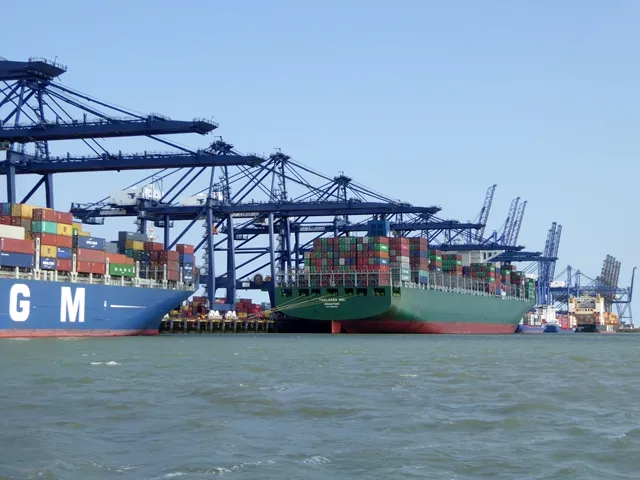
Photo: Simon Carey, CC BY-SA 2.0, via Wikimedia Commons
At a port-centric warehouse, the gate is not an administrative formality. It is the point at which custody changes hands, liability narrows, and the physical condition of a load becomes a commercial fact. A trailer or container seal is central to that moment. Yet many operations still treat the seal as a sticker with a number on it, rather than as the visible end of a process that must be issued, recorded, checked, broken and reconciled.
The distinction matters. A seal number on a clipboard is not evidence of custody. It is evidence that a number was written down. In 2026, with tighter delivery windows, more fragmented haulage arrangements and greater scrutiny of port-centric inventory, UK shippers and warehouse teams need a seal process that can withstand a challenge from a haulier, insurer, customs broker or customer. That requires discipline at the gate, not just a sticker on the door.
The gate is a custody checkpoint
Port-centric warehouses sit close to the quay, but proximity does not remove the need for control. If anything, it intensifies it. Cargo may move between terminal, yard, bonded store and distribution centre within hours. Each movement creates a handover, and each handover creates an opportunity for a seal to be misread, replaced, removed without record or accepted on trust.
The first audit question is therefore simple: can the warehouse demonstrate, from its own records, who held custody at each stage and what seal was present? If the answer depends on a driver's memory, a text message or a photograph that cannot be matched to a booking, the process is weaker than it appears.
A useful test is to take a recent import or export movement and reconstruct the seal trail without contacting the haulier. The trail should show the seal number issued or received, the person who recorded it, the time and location of the check, the condition of the seal, and the authority for breaking it. If any link is missing, the operation has a reconciliation gap.
Issuing and recording seals
Seal control begins before the vehicle reaches the gate. For outbound movements, seals should be issued from a controlled stock, not left in an open drawer or handed out informally. The issue record should link the seal number to the consignment, the trailer or container, the booking reference and the person taking custody. Where seals are supplied by a customer or haulier, the warehouse should record the source and condition on receipt.
The same principle applies to inbound loads. The seal number should be captured at booking or pre-advice where possible, then checked against the physical seal at the gate. A common failure is to record the number at the gate but not compare it with the number advised by the shipper or carrier. That turns the check into a data-entry exercise rather than a reconciliation.
Tamper-evident seals are only useful if their condition is examined. A seal can carry the correct number and still be compromised. Gate staff should be trained to look for cut marks, stretched plastic, replaced wire, distorted metal, evidence of heat or solvent, and seals that do not match the expected type. The check should be recorded as a condition, not merely a number. A simple code such as intact, damaged or missing is more useful than a blank field.
Receiving: check against the record, not memory
At receiving, the seal check should be a defined step in the gate process. The operative should compare the physical seal with the expected number, inspect the seal and the door furniture, and record any discrepancy before the vehicle is allowed to proceed. If the load is moving into a bonded or customs-controlled area, the same discipline should apply, with the seal number linked to the relevant movement reference.
Photographic evidence can support the record, but it should not replace it. A photograph of a seal is of limited value if it is not time-stamped, linked to the booking and stored where it can be retrieved. The audit question is not whether photographs exist, but whether they can be matched to a specific movement and a specific seal number.
Where seals are checked by a third party, such as a terminal or surveyor, the warehouse should still record the result in its own system. Relying on another party's record creates a dependency that may not survive a dispute. The port-centric model works best when each party keeps its own contemporaneous evidence and reconciles it at the handover.
Breaking a seal: a controlled event
Breaking a seal is not a routine act. It should be authorised, recorded and, where possible, witnessed. The record should show who broke the seal, when, where and why. If the seal is removed for inspection, customs examination or operational reasons, the replacement seal number should be recorded and linked to the original. A broken seal without a replacement record is an exception that should trigger review.
In practice, many warehouses break seals at the loading dock rather than at the gate. That can be acceptable if the dock is treated as a controlled point and the same recording discipline applies. The risk arises when the seal is broken before the vehicle is formally received, leaving a gap between arrival and custody. The audit should test whether the seal break occurs at a defined custody point, with the record created at the time of the break rather than at the end of the shift.
For outbound loads, the final seal should be applied after loading is complete and checked by a second person where the operation allows. The seal number should be recorded on the dispatch documentation and, where relevant, on the customs or transit record. The driver should be offered the opportunity to observe the sealing, and the handover should be recorded. This is not a ceremonial step; it is the point at which the warehouse's custody ends and the carrier's begins.
Exceptions: define before they occur
Every seal process needs an exception route. Missing seals, damaged seals, mismatched numbers, unrecorded breaks and replacement seals should not be resolved informally. They should be logged, escalated and closed with a documented outcome. The exception log is one of the most useful audit tools available because it shows where the process is under strain.
A practical exception procedure should state who can authorise a break, who can accept a replacement seal, what evidence is required, and when a load should be held. It should also set a time limit for resolution. A mismatch that is investigated immediately is a manageable event; a mismatch discovered a week later is a dispute.
Where a seal discrepancy affects a customs movement, the warehouse should involve the relevant broker or customs contact without delay. The objective is not to assign blame at the gate but to preserve the integrity of the movement and the evidence around it. A neutral, factual record is more valuable than a hastily written note.
Handover discipline across shifts and parties
Seal integrity is often lost at shift change. A seal checked at 06:00 may not be recorded until 08:00, by which time the vehicle has moved and the gate operative has changed. The handover between shifts should include open seal exceptions, pending breaks and any loads held for reconciliation. A simple shift log, reviewed at the start of each shift, can prevent small gaps from becoming systemic.
The same discipline applies between warehouse, haulier and customer. The seal number should appear consistently on the booking, gate record, goods receipt, dispatch note and, where applicable, the customs declaration. Inconsistency between documents is a warning sign. If the number on the gate record does not match the number on the consignment note, the warehouse should resolve the difference before releasing the vehicle or accepting the load.
A practical audit for 2026
A seal audit need not be complex. Start with a sample of twenty recent movements across import, export and transfer flows. For each, attempt to reconstruct the seal trail from the warehouse's own records. Score each movement on five points: seal number recorded at booking or pre-advice; physical check recorded at the gate; condition of seal recorded; break or replacement authorised and recorded; and final handover documented.
The results will usually reveal where the process is strong and where it relies on individuals. Follow up with a gate observation. Watch how seals are checked, whether the number is compared with the expected record, and whether exceptions are escalated. Then review the exception log for recurring causes. A pattern of mismatches on one haulier, one customer or one shift is a process issue, not a training issue alone.
Finally, test retrieval. Ask a colleague to find the evidence for a specific seal number without knowing the movement reference. If the evidence cannot be retrieved quickly, the record is not operational. The purpose of the audit is not to create more paperwork but to make custody visible.
Conclusion
Seal integrity is a process, not a sticker. For UK port-centric warehouses, the seal is the physical expression of a custody chain that runs from booking to gate to dock to handover. When that chain is reconciled, the warehouse can answer questions about custody with confidence. When it is not, the seal number on the clipboard is only a number. In 2026, with the pace of port-centric supply chains unlikely to slow, the operational advantage lies with sites that treat the seal as evidence, not decoration.