Every Charge Has a Clock: Reconciling Ancillary Invoices with Port Events
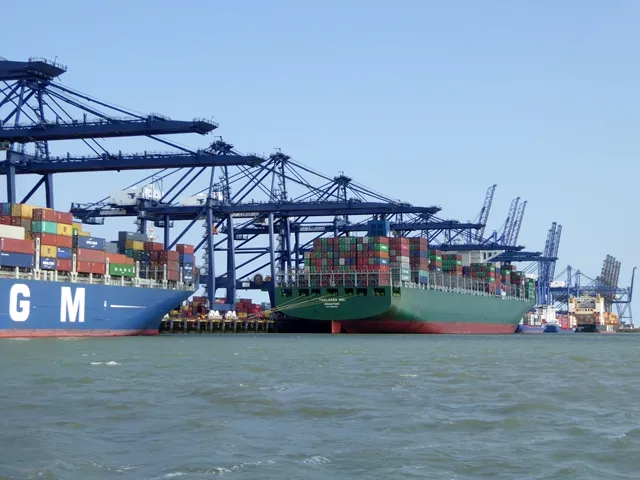
Photo: Oliver Dixon , CC BY-SA 2.0, via Wikimedia Commons
Ancillary charges have a useful characteristic that headline freight rates lack: they are supposed to be triggered by something that happened. A container was not collected. A plug was occupied. A load was reworked. A document was amended. Each event leaves a trace, and each trace can be compared with the invoice line that cites it. The difficulty is not that ports and warehouses invent charges; it is that the evidence sits in different systems, on different clocks, and under different commercial assumptions. The invoice arrives after the gate, by which time the operational detail has usually been compressed into a reference number.
For UK shippers and supply-chain managers, the practical task is to rebuild that detail before the payment run. This is not an exercise in disputing every line. It is an exercise in making the charge legible.
Start with the charge taxonomy, not the invoice
Ancillary invoices tend to arrive as a single document with a dozen descriptions. The first step is to sort those descriptions into families that behave differently. Detention is time-based and normally tied to equipment rather than cargo. Storage is space-based and may be charged by day, by bay or by cubic metre. Lift and handling charges are event-based: a move happened or it did not. Plug-in and reefer monitoring charges are service-based and depend on whether power was actually supplied. Rework and restocking charges are labour-based and should map to a specific instruction. Administration fees are the least event-like and the most likely to sit outside an agreed schedule.
Sorting the invoice this way prevents a common error: treating all charges as negotiable. Detention and storage are usually governed by tariff or contract; lift and rework should be evidenced; administration fees should be checked against the agreed rate card. Each family needs a different test.
The timestamp is the test
A charge is only as good as the time it cites. For detention, the relevant question is when the container became available and when it was actually collected. Those are not always the same as the notice date. For storage, the question is when the cargo crossed the warehouse threshold and when it left. For plug-in charges, it is when the reefer was connected and when it was disconnected. For rework, it is when the instruction was received and when the work was completed.
In practice, this means asking for the event log rather than the invoice summary. A port-centric warehouse should be able to produce gate-in and gate-out records, yard moves, dock receipts, weighbridge tickets and system timestamps. The port or terminal should be able to produce release times, vessel discharge times and equipment availability. Where the two sets of records disagree, the disagreement is the audit finding, not the invoice total.
A useful discipline is to build a simple event table for each charge line: charge reference, cited date, actual event date, evidence source, variance in hours or days, and the commercial rule that applies. This table does not need to be sophisticated. It needs to be consistent.
Where evidence lives, and where it leaks
The evidence usually exists, but it leaks between systems. A gate operating system may record a collection at 14:05, while the terminal's release system records the container as available from 09:00 the same day. The difference is four hours of detention that may or may not be chargeable depending on the free-time rule. A warehouse management system may show a put-away at 16:30, while the dock receipt is stamped 15:50. The gap may reflect queueing, scanning or a manual entry, but it still matters if storage is charged from the earlier time.
The audit should therefore identify the authoritative source for each event before the invoice is queried. In many UK port-centric operations, that means agreeing in advance which system's clock governs: the terminal operating system, the warehouse management system, the gate camera, or the signed paper ticket. Without that agreement, every reconciliation becomes a debate about whose timestamp is right.
Pre-agreeing caps and tolerances
The strongest defence against ancillary drift is commercial rather than analytical. Contracts and service schedules should specify not only rates but triggers, free time, rounding conventions and tolerances. A detention clause that says 'per day or part thereof' behaves very differently from one that rounds to the nearest hour. A storage clause that starts at 'receipt' needs a definition of receipt. A rework clause should say who authorises the work and what evidence is required before it is invoiced.
Tolerances matter as much as caps. A shipper may accept a small variance between the terminal's release time and the warehouse's gate-in time as normal operational noise. The point is to define that noise in advance, so that the monthly reconciliation focuses on exceptions rather than every line. Caps are equally useful for administration fees and documentation amendments, which can otherwise accumulate without a clear operational trigger.
A monthly reconciliation rhythm
The audit should not wait for a dispute. A monthly cycle works better: extract the ancillary invoice, sort by charge family, match each line to the event table, and flag variances above the agreed tolerance. Operations should review the flagged lines before finance approves payment. This sequence matters, because finance can see the charge but operations can see the cause.
The output should be short. A one-page summary per site, showing total ancillary spend by family, the number of lines reviewed, the number queried, and the value recovered or corrected. Over time, this creates a baseline that makes future invoices easier to read and gives procurement a factual basis for renegotiating tariffs.
Closing the gap between operations and finance
The invoice after the gate is not simply a billing document. It is a record of how the port-centric chain behaved in the previous period. If detention is rising, the cause may be collection scheduling rather than terminal performance. If plug-in charges are climbing, the reefer plan may need revisiting. If rework is recurring, the inbound instruction may be unclear. Reconciling the charges against events turns an administrative task into operational intelligence.
That is the discipline worth adopting: every charge has a clock, and every clock should be readable. Where the clock is missing, the charge is not necessarily wrong, but it is not yet proven. In a port-centric supply chain, that distinction is the difference between paying for a service and paying for an assumption.