What the Decision Notice Allows: Reconciling Planning Consent with Daily Port-Centric Operations

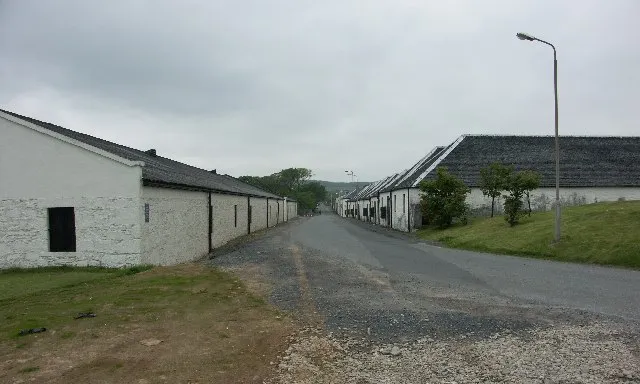
Photo: Roger Kidd, CC BY-SA 2.0, via Wikimedia Commons
Consent Is an Operating Document
In a port-centric warehouse, the physical operation is only half the story. The other half is permission. A site may have the quay, the racking, the yard and the labour, but the decision notice attached to its planning consent can still determine when lorries may arrive, how late the yard can work, where floodlights may point and how much external storage is acceptable.
Too often, those conditions are treated as a one-off administrative hurdle at construction or change-of-use stage. They are filed, discharged and largely forgotten. Meanwhile, the operation evolves: a new customer brings a different delivery profile, a peak season stretches the shift pattern, a contractor adds a generator, or a racking extension changes traffic flow. The result is a quiet divergence between what was consented and what happens on the ground.
That divergence is an operational risk, not merely a legal one. It can surface through a neighbour complaint, a local planning authority monitoring visit, an insurance query or a due-diligence review. The sensible response is a structured audit that treats planning conditions as part of the site's operating model.
Build the Condition Register
The first step is to assemble the consent record in one place. This should include the decision notice, approved plans, condition discharge correspondence, any subsequent variations, and the site's own operating procedures. For older sites, it may be necessary to check the local authority's online register and request missing documents.
From that record, create a condition register. Each entry should capture the condition number, the requirement in plain language, the evidence needed to demonstrate compliance, the person responsible and the review frequency. Conditions that are easily overlooked include those governing:
- permitted HGV movement windows and routeing;
- night-time and weekend working;
- noise limits at the site boundary or nearest sensitive receptor;
- external lighting levels, direction and hours of use;
- open storage, container parking and yard capacity;
- refrigeration plant, generators and fixed equipment;
- dust, odour or spillage controls;
- drainage and surface-water management;
- landscaping and boundary treatment.
Not every condition will apply to every site, but the register should be comprehensive enough to show that the exercise has been done properly.
Test the Register Against the Site
A register is only useful if it is tested against reality. The audit should compare each condition with observable operating practice over a representative period, including a normal week and a peak week. Gate data, booking systems, tachograph records, CCTV, noise monitoring, lighting surveys and supervisor logs can all provide evidence.
Walk the site at different times of day and night. Check where vehicles actually queue, where trailers are parked, which lights are on after hours and whether external storage has crept beyond approved areas. Speak to gatehouse staff, shift managers and contractors. The aim is not to catch people out but to establish whether the written permission and the lived operation still describe the same site.
The Usual Drift Points
In port-centric warehousing, several pressure points recur. HGV timing is one. A consented movement window may reflect an earlier traffic model, while current customer demands pull deliveries earlier or push collections later. Even where the gate is closed, vehicles may idle on the approach road, creating a noise or nuisance issue that the condition was designed to prevent.
Lighting is another. High-mast floodlights installed for safety may spill beyond the boundary, particularly when foliage screens have grown or been removed. Refrigeration and generator plant can produce tonal noise that is more noticeable at night than daytime measurements suggest. External storage is a third: containers, pallets and trailers can expand into areas shown on approved plans as landscaping or circulation space.
None of these changes necessarily amounts to a serious breach. But each weakens the site's position if a complaint is made. The audit should identify them before they become contested.
Rank Enforcement Risk
Once gaps are identified, rank them by likelihood and consequence. A condition that is clearly breached, regularly breached and visible to neighbours carries more risk than an administrative omission with no off-site impact. Consider the sensitivity of nearby receptors, the history of complaints and the local authority's enforcement policy.
For each material gap, decide whether to correct the operation, apply to vary the condition, or gather further evidence. Retrospective applications are not a substitute for compliance, but they can be a legitimate route where the consent no longer fits the site. Legal advice should be taken where the position is unclear.
Make Compliance Defensible
A defensible record is built continuously, not assembled after a complaint. Keep gate logs, noise and lighting monitoring results, maintenance records for plant, contractor inductions and minutes of condition reviews. Train supervisors to recognise the conditions that affect their shift. Include planning constraints in customer onboarding so that new volume does not silently override consented limits.
A simple compliance matrix, reviewed quarterly and after any significant operational change, is often more valuable than a thick file produced in haste. It shows that the operator understands its permission and is managing against it.
A Review Cycle for 2026
The current operating year is a sensible moment to re-baseline. Set a review cycle that links planning conditions to peak planning, capital projects and changes in customer mix. Before the next peak, confirm that gate windows, yard layouts, lighting and plant schedules remain within consent. After any change, update the register and the evidence trail.
Port-centric sites succeed because they keep goods moving. They also need to keep permission aligned with practice. Treating the decision notice as an operating document rather than an archive item is a small discipline with a disproportionately large protective effect.