The Quayside Thermostat: Auditing Cold Storage That Was Never Purpose-Built
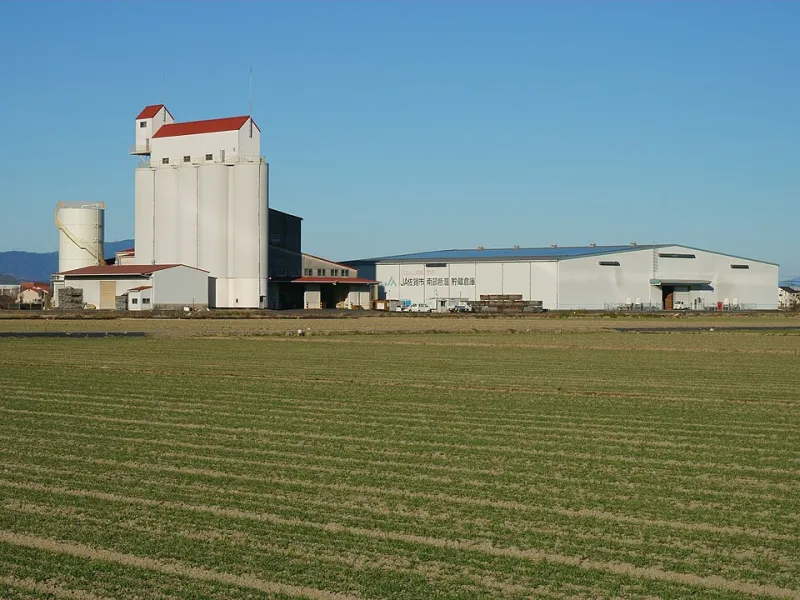
Photo: Pekachu, CC BY-SA 4.0, via Wikimedia Commons
Cold storage at a UK port has a habit of arriving sideways. A general-purpose shed is built, a tenant with a chilled contract appears, refrigeration is bolted on, and a cold chain is declared. For a season or two it works. Then a pharmaceutical importer asks for temperature mapping evidence, a retailer asks about holdover after a power interruption, and a Border Force officer asks where the goods were while the SPS paperwork was being resolved. The answers tend to reveal that the building is doing something it was not designed for.
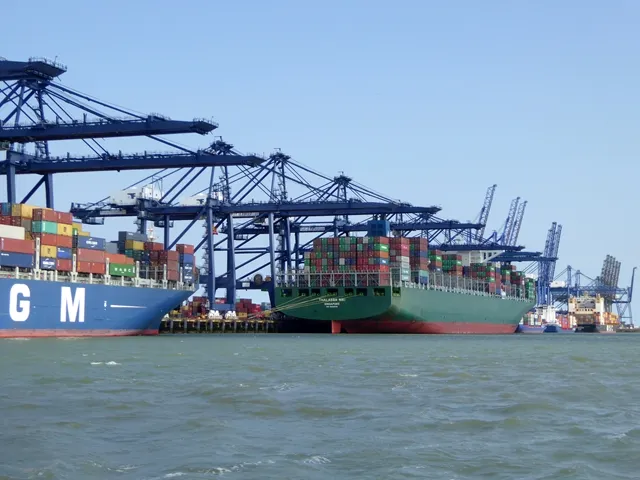
The pressure behind that scenario is real. More temperature-sensitive food, more high-value pharmaceuticals and an increasing share of chilled and frozen cargo are moving through ports such as Teesport, Felixstowe, Southampton, London Gateway and Immingham. Much of the storage capacity serving those flows is retrofit rather than purpose-built. That is not automatically a problem — but it does mean the assumptions behind the building need testing rather than inheriting.
Start With the Envelope, Not the Plant
Operators often audit refrigeration first because it is the visible machinery. The more productive starting point is the fabric. A chilled store held at 2–8°C in a coastal environment is fighting wind-driven rain, salt-laden air and a very large opening in one wall where trailers dock.
Look for continuity of insulation and the absence of thermal bridging at column bases, roof penetrations and the junctions between panels. Check the condition and closing discipline of fast-acting doors, the state of dock seals and shelters, and whether air curtains or lobbies are specified where traffic frequency is high. For frozen storage, confirm that ground frost heave has been designed out rather than managed by guesswork, and that floor slab temperatures are monitored in winter as well as summer.
A useful test is the recovery rate. Deliberately open a dock door under controlled conditions, measure how long the store takes to return to setpoint and how far the temperature drifts during the event. If nobody can produce that number, the building has never been characterised — only operated.
Redundancy Is a Figure, Not an Adjective
Most cold stores describe their refrigeration as having redundancy. Fewer can state the configuration precisely. Ask whether the design is N+1 at the compressor, the condenser or the whole system, and whether the standby equipment has been run under load in the last twelve months. A standby chiller that has not been started under duty is a spare part, not a contingency.
Three further questions tend to separate mature operations from hopeful ones. First, is the site on a single electrical feed, and if not, what is genuinely isolated by the changeover? Second, how does the control system behave when a single sensor fails — does it fail to a safe state or to a default that masks the fault? Third, how are condenser units protected against coastal corrosion, and does the maintenance regime reflect the environment rather than a generic schedule?
Refrigerant choice deserves a mention too. The F-gas phase-down continues to reshape what is economical to run and service, and a store still dependent on high-GWP blends should have a documented plan rather than an assumption that servicing will stay affordable.
The Evidence Chain: Mapping, Monitoring and Alarms
Regulators and customers increasingly want evidence rather than assurance. Temperature mapping should be repeated when the racking layout changes, when load patterns change materially and seasonally, and it should cover both empty and loaded conditions. Mapping performed once, at commissioning, on an empty store, tells you very little about July with a full rack and six trailers an hour.
Data loggers need UKAS-traceable calibration and a placement plan that reflects the mapping output — the warmest and coldest positions, not the most convenient ones. Alarm escalation should be documented to named roles with out-of-hours coverage, and there should be a rehearsed procedure for excursions that includes quarantine, assessment by a competent person and customer notification.
Retention matters. Pharmaceutical customers operating under Good Distribution Practice expect records that can be produced months or years later, and MHRA-authorised wholesale operations will be held to that standard. If the site holds a Wholesale Dealer's Authorisation, the temperature records are part of the licensed activity, not a facilities nicety.
The Port-Specific Compliance Layer
What distinguishes a port-centric cold store from an inland one is that the goods inside it are frequently not yet in free circulation. That changes the audit.
Under the Border Target Operating Model, sanitary and phytosanitary consignments arriving from the EU and elsewhere require pre-notification through IPAFFS and may be directed to a Border Control Post for documentary, identity and physical checks. During that period the consignment sits somewhere, and that somewhere must hold temperature. Confirm who is responsible for the cold chain while a consignment is held pending clearance, and how the store interacts with the port's check facilities.
Where goods are held in a customs warehouse or within a freeport customs site, the audit should test the interface between customs status and physical condition. Duty suspension does not suspend spoilage. Records that satisfy HMRC and records that satisfy a food safety management system are different documents serving different purposes, and the operation needs both.
Food businesses should also verify that storage and distribution certification, HACCP documentation and supplier approval processes extend to any subcontracted cold capacity used during peak. Splitting a consignment across two stores mid-season is common and rarely audited.
A Working Checklist
- Envelope continuity, thermal bridging and dock seal condition documented with photographs and dates.
- Measured door-open recovery times at representative ambient conditions.
- Written redundancy configuration with evidence of standby plant tested under load within twelve months.
- Electrical single-points-of-failure identified and changeover scope confirmed.
- Temperature mapping covering seasonal, loaded and empty conditions, reviewed after layout changes.
- Logger calibration certificates current and traceable; placement plan matched to mapping results.
- Alarm escalation to named roles, with out-of-hours testing recorded.
- Excursion procedure rehearsed at least annually, with a worked example retained.
- Cold chain responsibility defined for consignments held pending SPS or customs clearance.
- Refrigerant transition plan aligned to F-gas obligations and servicing economics.
What the Audit Is Really For
A cold-store audit is not a compliance ritual. Its value is in converting a set of inherited assumptions into stated facts: this is the recovery rate, this is the redundancy, this is the evidence, this is who is accountable while goods await clearance. Shippers placing perishable or pharmaceutical cargo through a port-centric facility are entitled to ask for those facts before the first pallet moves, and operators who can answer them precisely will find the commercial conversation considerably shorter.