When the Reach Stacker Stops: Stocking and Testing Maintenance Cover at UK Port-Centric Warehouses
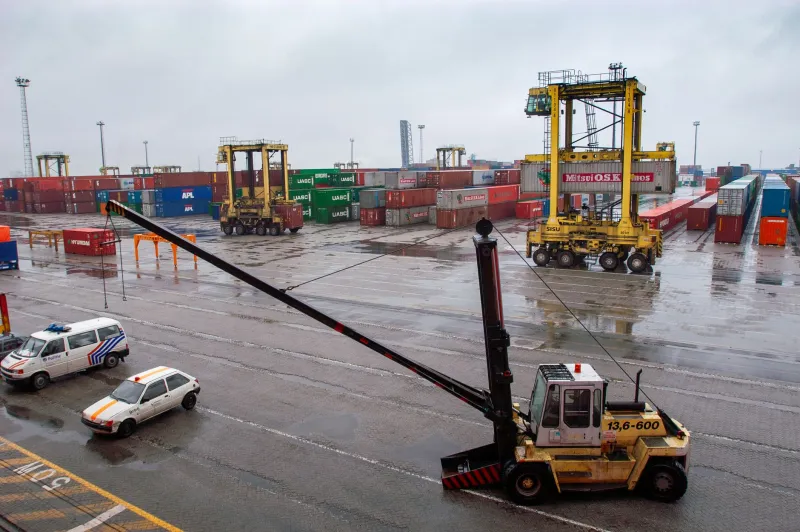
At a port-centric warehouse, the gate is a promise. A container is discharged, a haulier arrives, a slot is booked and a customer expects movement. The promise is kept by equipment that is often taken for granted: reach stackers, terminal tractors, empty container handlers, dock levellers, roller doors and the forklift fleet behind them. When one of those assets stops, the effect is not a maintenance inconvenience. It is a throughput event that can ripple from the quay to the customer.
Most operators audit labour, yard space, customs procedures and peak capacity. Fewer audit maintenance readiness with the same discipline. The result is a familiar pattern: a hydraulic hose fails at 22:00, the depot is 180 miles away, the part is not on the van, and a door remains out of service into the next shift. With the 2026 peak trading period already in view, the question is not whether equipment will fail. It is whether the operation has deliberately decided what happens next.
Start with the failures that stop the gate
A maintenance-readiness audit should begin with flow, not with the asset register. For each item of handling equipment, identify the failure modes that halt or materially reduce throughput. A pallet truck with a flat battery is a nuisance. A dock leveller stuck below dock height removes a door from the receiving plan. A reach stacker with a failed spreader twistlock can stop container handling in a yard zone. A terminal tractor with a failed fifth-wheel mechanism can strand trailers at the interchange point.
List the equipment, then list the failure modes that matter. Distinguish between degraded operation and stopped operation. A roller door that opens manually may be tolerable for a short period; a door controller failure that prevents secure closure may not be. The purpose is to find the single points of failure: one critical spare, one competent technician, one supplier depot, one diagnostic laptop, one password or one legacy control system that nobody else understands. A port-centric warehouse is a system, and the audit should expose where the system has no alternative route.
Classify spares by consequence, not by cost
Procurement often treats spare parts as inventory cost. Maintenance readiness treats them as downtime insurance. The two views need not conflict, but they should be separated. A simple criticality matrix is more useful than a long parts list. Group spares by the consequence of their absence and the time required to replace them.
A-items are parts that halt flow, have no practical on-site substitute and cannot be relied upon to arrive within the tolerable downtime window. Examples may include a reach stacker spreader component, a terminal tractor fifth-wheel assembly, a dock leveller hydraulic power pack or a door controller printed circuit board. These are candidates for stock on site, consignment stock or a written supplier guarantee that is tested rather than assumed. B-items can be substituted, borrowed from a sister site or replaced within a shift. C-items are available from a local merchant and need only be listed, not stocked.
The financial argument is straightforward. The cost of a critical spare is usually small relative to the cost of an idle door, a missed collection or a delayed container move. The risk is overstocking slow-moving parts that tie up working capital and become obsolete. The audit should therefore record lead times, substitution options and the operational consequence of failure, not simply the purchase price.
Read the contract, then test it
Service-level agreements are frequently written around response times rather than repair times. A supplier may promise to answer a call within four hours without promising to have the right part or a competent engineer. For port-centric operations, the distinction matters. A response that arrives without the means to repair is not a recovery plan.
Audit each maintenance contract for four things: what is included, what is excluded, how quickly a fix is targeted and how out-of-hours cover is delivered. Check whether parts are included, whether diagnostic software and access codes are available, whether the supplier can escalate to a second engineer and whether the contract covers the specific equipment models on site. Then test the contract. A tabletop exercise is useful; a live drill is better. Call the out-of-hours number as though a dock leveller has failed. Ask for an estimated arrival time and confirm whether the relevant part is held on the van or at a local depot. Record the result. A supplier that performs well in a drill is more valuable than one that performs well in a tender document.
The technician question
UK port equipment is increasingly specialised, and competent engineers are not evenly distributed. OEM depots and specialist contractors tend to cluster around major industrial corridors, which can leave ports in the North East, Humber, North West and Scotland at a distance from rapid support. The audit should map technician cover by skill, not just by headcount. Who can diagnose a reach stacker hydraulic fault? Who understands the legacy control system on an older crane? Who can safely work on high-voltage charging infrastructure? Who is available at weekends?
Single-person dependency is a risk in its own right. Cross-training, documented fault-finding procedures and controlled access to diagnostic tools reduce the chance that one absence becomes an outage. Apprenticeships and knowledge capture are slow remedies, but they belong in the same conversation as spares. A warehouse that stocks the right part but cannot fit it has not solved the problem.
Stock, consign or promise?
The decision rule is simple: if a failure stops flow, and the part cannot be relied upon within the tolerable downtime, it should be on site or contractually held for the site. Consignment stock can bridge the gap, but it must be managed. Confirm where the stock is physically held, who owns it, how replenishment is triggered and how often the arrangement is reviewed. A distant depot promise is not equivalent to a part on a shelf, particularly during peak periods when supplier transport is stretched.
For shippers using third-party port-centric warehousing, these questions belong in the due-diligence pack. Ask to see the critical spares list, the service contracts and the results of the most recent call-out drill. For operators, the audit should be reviewed quarterly and repeated after any change of equipment, contractor or peak profile. Track mean time to repair, first-time fix rate, parts availability and out-of-hours response. Report them alongside labour and yard metrics, because maintenance readiness is a throughput control.
The spare-part desert is rarely a shortage of parts. It is a shortage of decisions made before the failure. A port-centric warehouse that maps its single points of failure, tests its suppliers and stocks against consequence is better placed to keep the gate moving when the equipment stops.